Programs & Pricing

A clear pathway into mentored online research.

VRI offers two main public pathways—Circles and Groups—along with limited Private Mentorship by inquiry. Programs are fully online, organized around Spring, Summer, and Fall terms, and designed for students seeking rigorous, mentor-guided work in mathematics and adjacent computational fields.

A structured pathway for students ready for more than enrichment.

VRI programs are designed for students who are ready for a more focused academic environment: clear structure, thoughtful mentorship, and a stronger culture of inquiry than typical enrichment options.

Program Design

Two public pathways, one clear academic framework

VRI is built around a scalable Circle pathway, a premium small-group Group pathway, and limited Private Mentorship by inquiry when fit and mentor availability align.

  • Structured entry points for motivated students
  • Premium small-group research for deeper mentorship
  • Limited private placements in select cases
Fit

Mentorship, scale, and pacing vary by pathway

Pathways differ in cohort size, duration, level of mentor access, expected independence, and the rhythm of work across each public term.

  • All pathways are fully online
  • Public offerings run in Spring, Summer, and Fall
  • End-of-term presentations or symposium-style sharing may be included

Two main public pathways, plus limited private mentorship.

Students can enter VRI through Circles or Groups, with limited Private Mentorship available by inquiry for select matches and longer-term work.

Tier I

Circles

Structured, guided, and scalable mentored research experiences designed to introduce students to serious research habits in an accessible but still rigorous environment.

Typical cohort size: 10–12 students
Cost per student: $1,395
Typical duration: 6 weeks
Public terms: Spring, Summer, Fall
Tier II

Groups

Smaller collaborative cohorts with more intensive mentor interaction, greater ownership, and a closer resemblance to premium boutique research experiences.

Typical cohort size: 5-6 students
Cost per student: $3,495
Typical duration: 10 weeks
Public terms: Spring, Summer, Fall

Need a more individualized research match?

For students seeking more individualized or longer-term work, VRI may occasionally consider limited Private Mentorship placements by inquiry.

By inquiry only

Starting tuition: $16,000. Availability depends on subject area, mentor fit, and researcher availability. Private Mentorship placements are limited and not guaranteed.

Current research areas, with room to grow.

VRI’s current research areas reflect subjects that are intellectually durable, well suited to serious online work, and flexible enough to expand over time.

Abstract mathematical illustration representing theoretical mathematics and geometric structure
Area I

Mathematics

A home for proof, theory, structure, mathematical experimentation, abstraction, and original reasoning across pure and applied directions. Representative topics may include graph theory, combinatorics, number theory, discrete geometry, dynamical systems, and other areas of serious mathematical inquiry.

Abstract data visualization representing statistics, data science, and artificial intelligence
Area II

Statistics & Data Science

A research area centered on statistical reasoning, modeling, computation, and the careful analysis of real-world data. Representative topics may include Bayesian statistics, causal inference, forecasting, data visualization, experimental design, and quantitative decision-making.

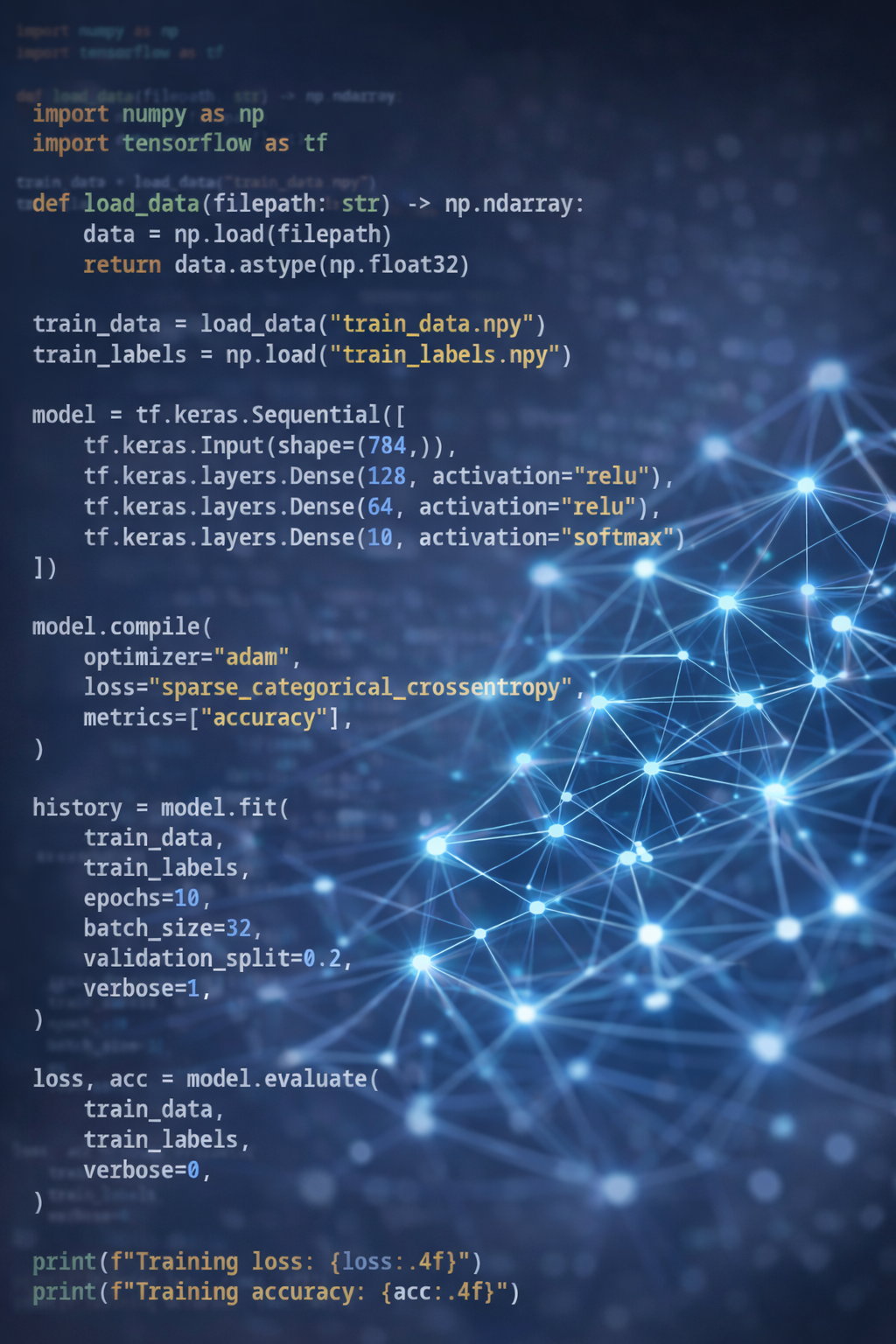
Abstract code-based illustration representing computer science and computational systems
Area III

Computer Science & AI

A broad and future-facing domain centered on algorithms, intelligent systems, software, and computational problem-solving. Representative topics may include algorithm design, artificial intelligence, machine learning, multi-agent systems, computer vision, natural language processing, and related computational approaches.

Abstract quantitative finance and decision science illustration with charts, analytical overlays, and a refined economic research aesthetic
Area IV

Quantitative Economics, Finance & Decision Science

A research area connecting mathematical reasoning, data analysis, forecasting, optimization, and decision-making in economic and financial contexts. Representative topics may include risk, forecasting, quantitative finance, game theory, operations research, and data-informed decision models.

Abstract public health, biostatistics, and epidemiology illustration with global map, data points, and analytic trend curves
Area V

Public Health, Biostatistics & Epidemiology

A research area centered on health data, population-level patterns, biostatistical reasoning, and the study of disease, risk, and intervention in real-world settings. Representative topics may include infectious disease modeling, biostatistics, health disparities, environmental health, forecasting, and data-informed public health decision-making.

Fully online, live, and built around meaningful independent work.

All VRI programs are conducted online. Students meet live with mentors and peers, then continue with meaningful independent work between sessions as projects develop.

Online Format

How VRI is delivered

VRI is designed to support thoughtful, well-supported work in an online setting, with a format that balances live interaction, research guidance, and independent scholarly work.

  • Live virtual meetings with mentors and, where applicable, peers
  • Independent work between sessions
  • Scheduling based on pathway structure and mentor availability
Student Setup

What students should have

Students do not need an elaborate technical setup, but they should be prepared to participate consistently and professionally in a focused online research environment.

  • Reliable internet access and a working email account
  • A computer or tablet with camera and microphone
  • A quiet workspace; headphones are recommended
  • A writing tablet with stylus is strongly recommended for math-heavy work

Tools may vary by mentor and project.

Meetings may use Zoom, Microsoft Teams, Google Meet, or a comparable platform. Some projects may also involve shared documents, slides, code notebooks, datasets, or other discipline-specific tools.

Clear expectations for cost, timing, and outcomes.

VRI programs are designed as focused, mentor-guided academic experiences. Cohort size, duration, and mentor access all matter when determining the right pathway.

Current Tuition

Current public pricing

VRI pricing reflects cohort size, duration, and the level of mentor access built into each pathway.

  • Circles: $1,395 per student
  • Groups: $3,495 per student
  • Private Mentorship: starting at $16,000 by inquiry
  • Limited financial assistance may be available in select cases
Terms & Expectations

Spring, Summer, and Fall structure

Public offerings run on three main annual terms. Students work toward a final paper, presentation, or comparable project deliverable, with end-of-term presentation or symposium-style sharing where appropriate.

  • Three main public terms each year: Spring, Summer, Fall
  • Live sessions plus meaningful independent work between meetings
  • Consistent attendance and sustained effort matter
  • Publication is not guaranteed

Explore current opportunities or reach out about fit.

Families can review the current round of mentored projects, learn more about the institute, or inquire about whether Circles, Groups, or Private Mentorship is the strongest fit for a student’s goals.