Programs & Pricing

Programs for students ready to do serious research online.

VRI offers two public pathways—Circles and Groups—along with Research Extension in select continuation cases. All programs are fully online and focused on mathematics, statistics, data science, computer science, and related quantitative fields.

Choose the pathway that fits the student best.

All public VRI programs are fully online. Circles are the broader public entry point. Groups are smaller and more intensive, with closer mentor interaction and a deeper project experience.

Tier I

Circles

A guided public pathway designed for students building research readiness in a structured cohort setting.

10–12 students 6 weeks 2 live sessions/week $995 Spring, Summer, Fall
  • Fully online live mentor-led sessions
  • Meaningful independent work between meetings
  • Broader public entry point into VRI
Tier II

Groups

A smaller public pathway for students ready for deeper sustained work, stronger ownership, and more intensive mentor interaction.

5–7 students 6 weeks 3 live sessions/week $1,395 Spring, Summer, Fall
  • Fully online live mentor-led sessions
  • Meaningful independent work between meetings
  • Smaller and more intensive than Circles
  • Readiness-reviewed pathway; project-specific prerequisites may apply
Research Extension: available only by invitation in select cases as an advanced continuation pathway after a Circle or Group. It typically lasts typically 10–12 additional weeks and is considered when prior performance, mentor recommendation, project suitability, and capacity align. Availability may vary by term and subject area. Starting tuition is currently $1,695.

Availability snapshot.

Summer 2026 · Session 1

Begins June 8, 2026

Registration deadline May 11, 2026

Circles closed Groups closed

Summer 2026 · Session 2

Begins July 20, 2026

Registration deadline June 22, 2026

Circles open Groups open

Research areas across mathematics and computational sciences.

VRI currently offers research across multiple broad quantitative areas, with room to expand over time.

Abstract mathematical illustration representing theoretical mathematics and geometric structure
Area I

Mathematics

A home for proof, theory, structure, mathematical experimentation, abstraction, and original reasoning across pure and applied directions. Representative topics may include graph theory, combinatorics, number theory, discrete geometry, dynamical systems, and other areas of serious mathematical inquiry.

Abstract data visualization representing statistics, data science, and artificial intelligence
Area II

Statistics & Data Science

A research area centered on statistical reasoning, modeling, computation, and the careful analysis of real-world data. Representative topics may include Bayesian statistics, causal inference, forecasting, data visualization, experimental design, and quantitative decision-making.

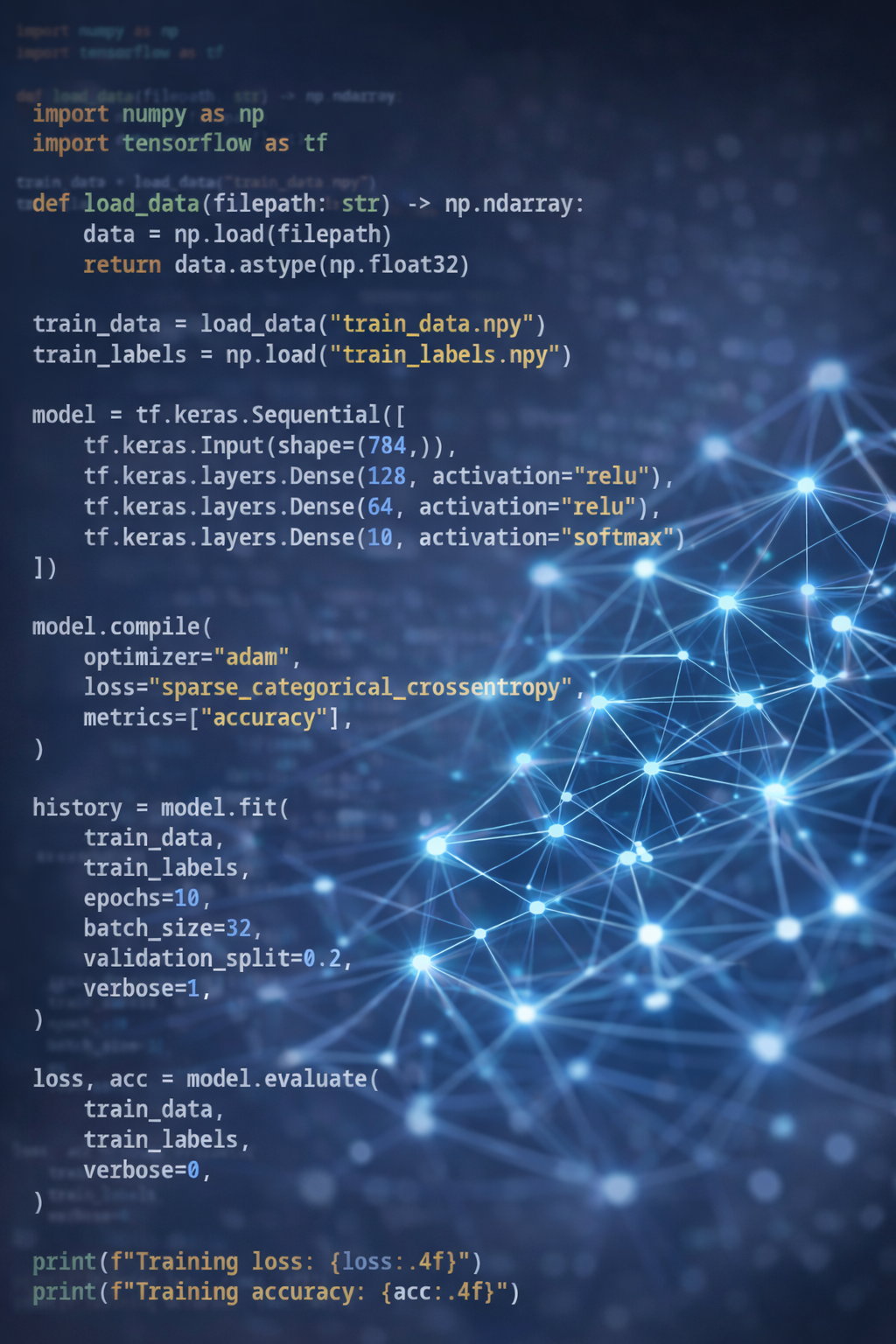
Abstract code-based illustration representing computer science and computational systems
Area III

Computer Science & AI

A broad and future-facing domain centered on algorithms, intelligent systems, software, and computational problem-solving. Representative topics may include algorithm design, artificial intelligence, machine learning, multi-agent systems, computer vision, natural language processing, and related computational approaches.

Abstract quantitative finance and decision science illustration with charts, analytical overlays, and a refined economic research aesthetic
Area IV

Quantitative Economics, Finance & Decision Science

A research area connecting mathematical reasoning, data analysis, forecasting, optimization, and decision-making in economic and financial contexts. Representative topics may include risk, forecasting, quantitative finance, game theory, operations research, and data-informed decision models.

Abstract public health, biostatistics, and epidemiology illustration with global map, data points, and analytic trend curves
Area V

Public Health, Biostatistics & Epidemiology

A research area centered on health data, population-level patterns, biostatistical reasoning, and the study of disease, risk, and intervention in real-world settings. Representative topics may include infectious disease modeling, biostatistics, health disparities, environmental health, forecasting, and data-informed public health decision-making.
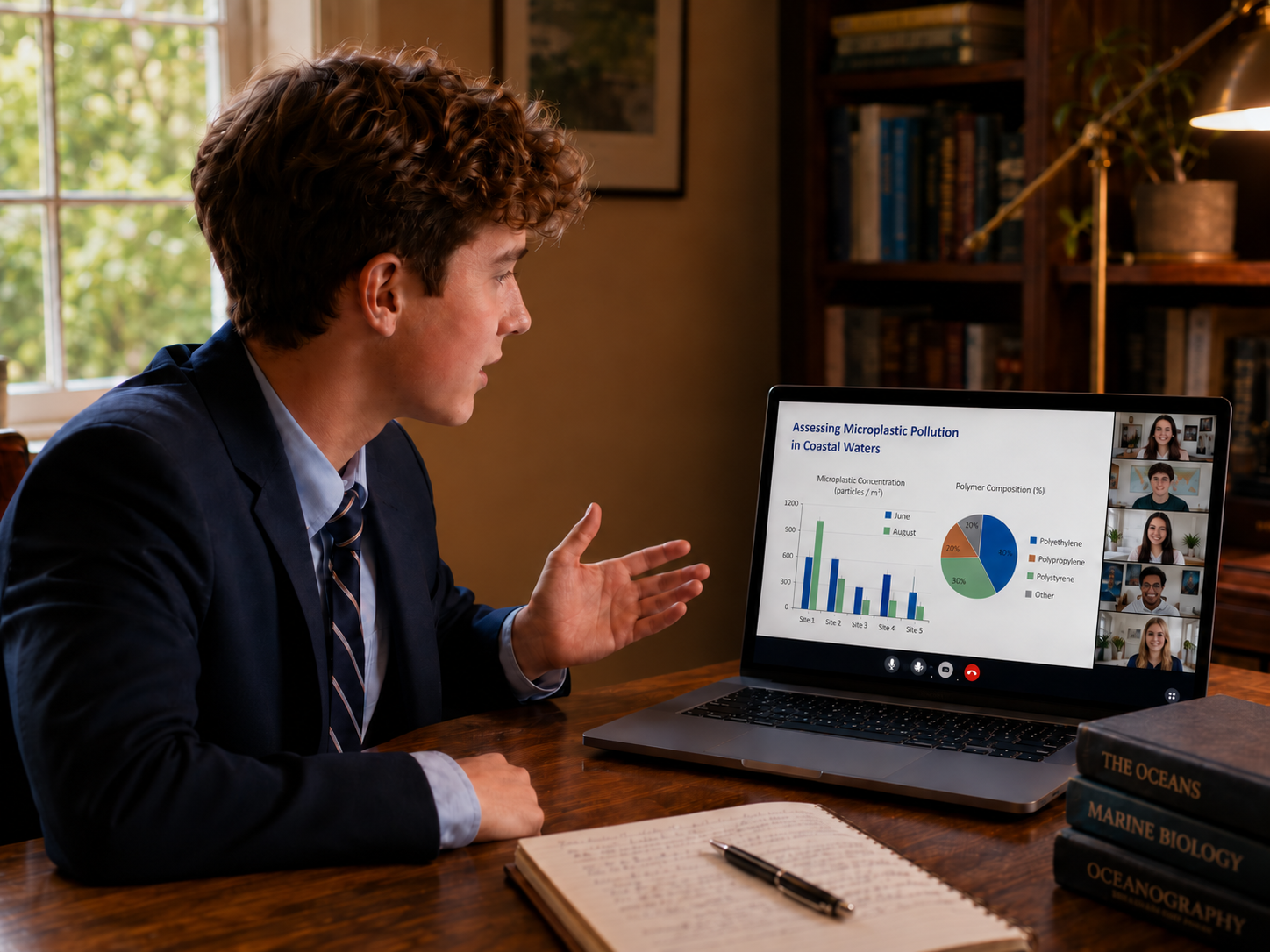
Delivered fully online.

All VRI programs are delivered online through live mentor-led sessions and independent work between meetings.

How It Works

What students can expect

  • Live virtual meetings with mentors and, where applicable, peers
  • Independent work between meetings
  • Schedules set by pathway structure and mentor availability
  • Meetings may use Zoom, Microsoft Teams, Google Meet, or a similar platform
  • Final presentations may include peers, families, VRI mentors, and invited academic guests when available
Student Setup

What students should have

  • Reliable internet access and a working email account
  • A computer or tablet with camera and microphone
  • A quiet workspace; headphones are recommended
  • A writing tablet with stylus is strongly recommended for math-heavy work

Questions before you register?

Review the Questions & Answers and policies, complete the Interest Form, or move directly to the current registration form.